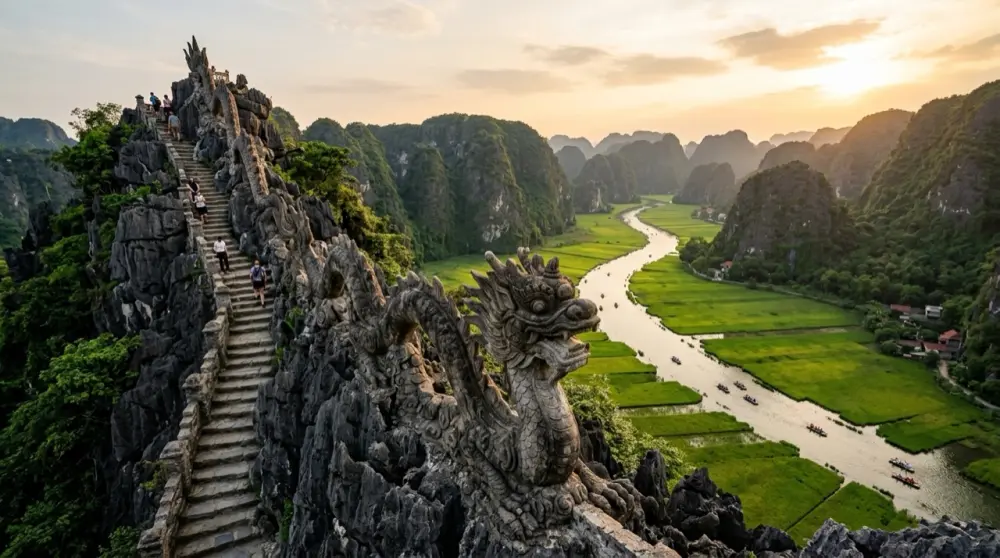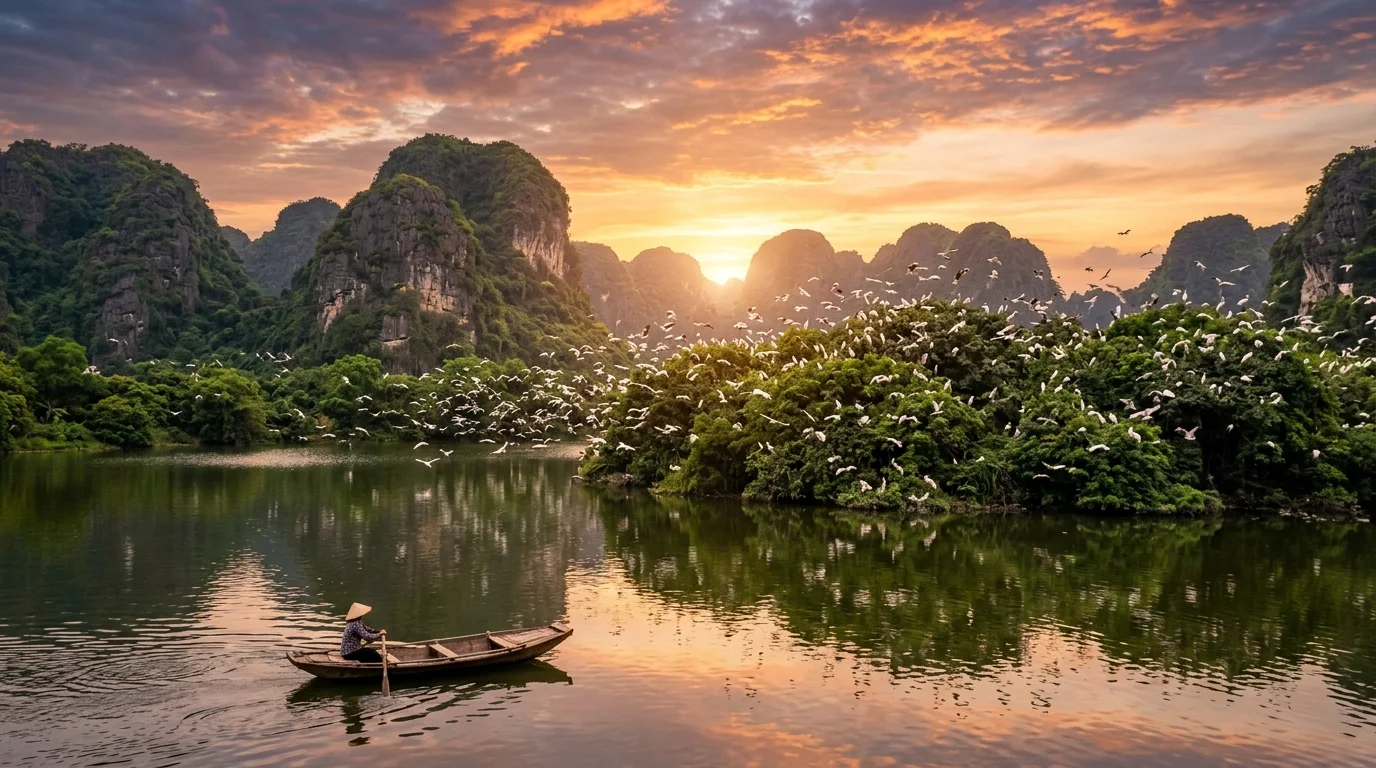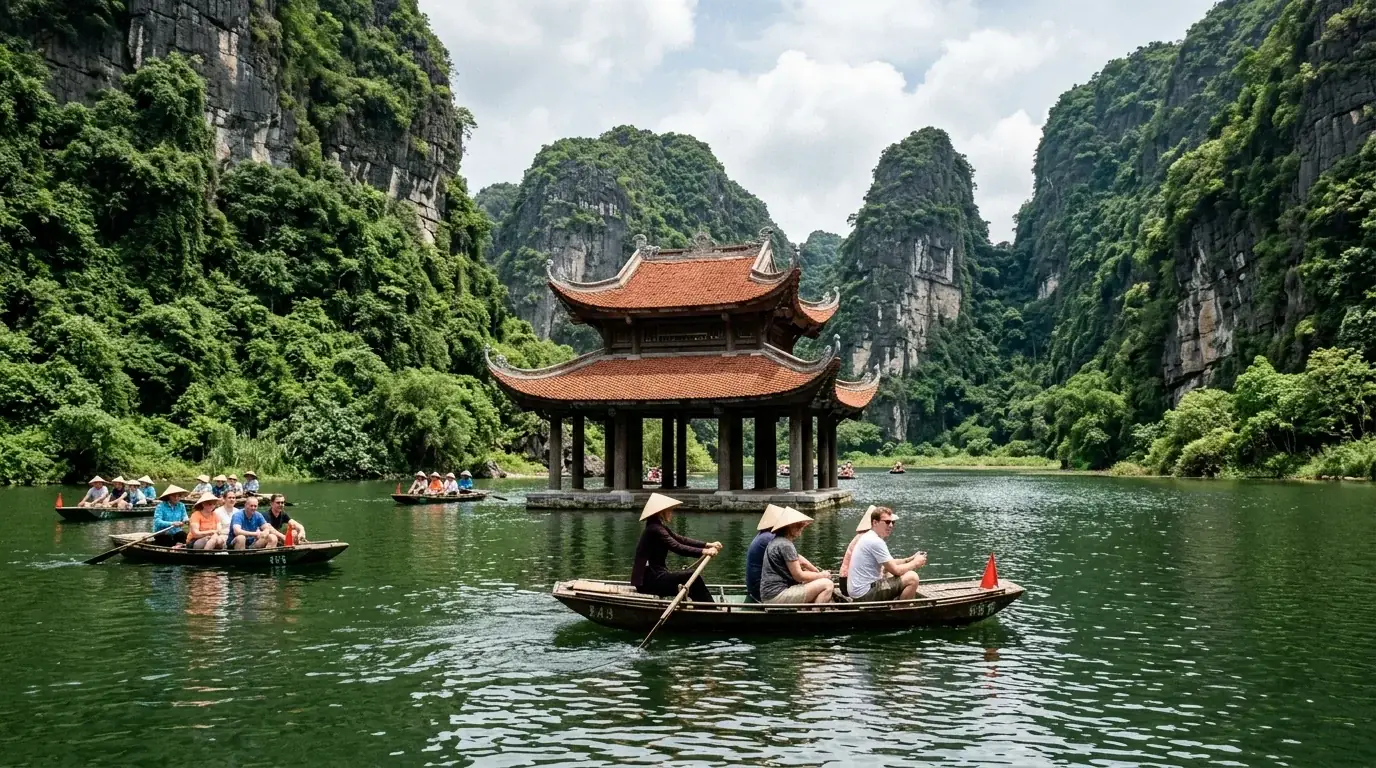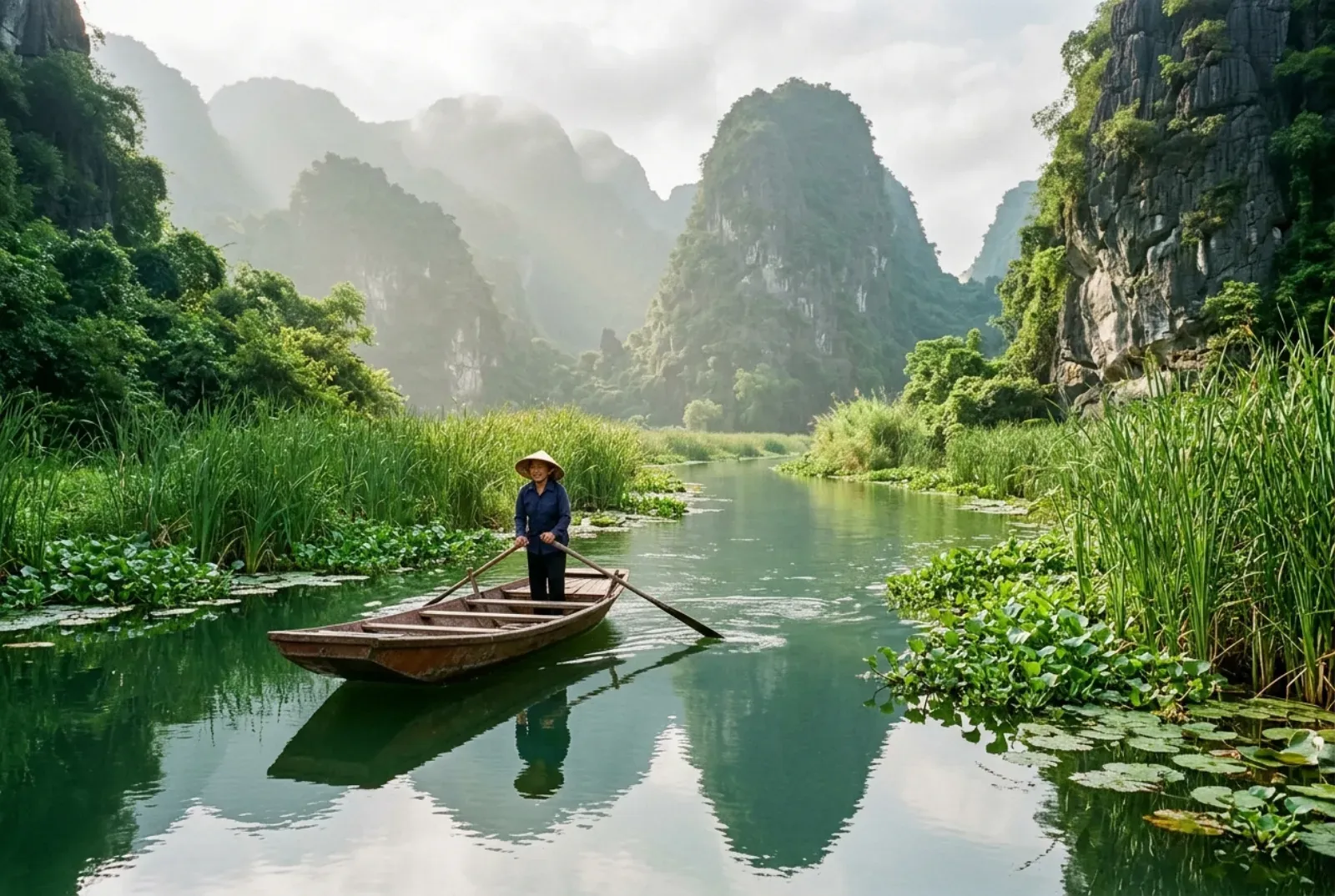
Ninh Bình looks made for drone footage: limestone karsts rising from rivers, winding valleys, and rice fields changing colour with the season. That beauty is also why flying here needs care. Temples are places of worship, wetlands are wildlife habitat, boats carry families who did not ask to be filmed, and villages are people's homes, not sets. This guide explains where to be careful, how to ask, and what to do instead if flying is not appropriate, without pretending to be a legal document. Rules change, so always check the current rules before you fly.
Why Ninh Bình tempts drone pilots, and why caution matters
From above, Ninh Bình reveals patterns you cannot see from the ground: river bends, valley shapes, and the geometry of rice fields against karsts. It is understandable that photographers want that view. It is also easy to forget, from behind a screen, that the same flight passes over worshippers, nesting birds, rowers at work, and children playing in a village lane.
The question to ask before every flight is not only whether you can fly, but whether you should fly here, now, in this way. A short, quiet, respectful flight in an open area is a different matter from hovering over a temple courtyard during a ceremony or chasing birds for a closer shot. When in doubt, keep the drone packed and enjoy the ground-level photo instead.
Where to be extra careful: temples, crowds, wildlife and boats
Temples and pagodas. Treat every temple, pagoda and shrine as a no-fly zone unless a person in charge clearly allows it. Worship, quiet and respect come before footage, and a drone over a ceremony is intrusive even if no rule is broken. The same applies to crowded viewpoints, where a drone adds noise, distraction and risk for people on narrow steps.
Wildlife and wetlands. Vân Long and Thung Nham are bird habitat, and birds react to drones even when pilots cannot see the reaction. Do not fly close to roosting or nesting birds, do not chase flocks, and do not fly low over reed beds. If birds change behaviour because of your drone, land at once.
Boats and rivers. Boats are small, rowers are working, and passengers did not consent to being filmed from above. Do not follow a boat, hover over a pier, or fly low across a river corridor where boats pass. On a boat yourself, keep the drone packed unless the operator clearly agrees, and never launch from a moving boat.
Permission, privacy and local etiquette
Ask before you fly, in plain language, and accept no as a complete answer. Ask your homestay host about the village area, ask staff at a site about that site, and ask your boat operator before any boat-related flight. A booking or a ticket does not imply permission to fly, and a quiet area is not the same as an approved area.
Privacy matters as much as permission. Do not film into homes, courtyards, schoolyards or bathing areas, and do not post identifiable footage of people who did not agree to be filmed. If someone asks you to stop, stop, and delete footage of them if they ask. A good reputation for visiting photographers depends on pilots who behave this way.
Check current rules before you fly
Drone rules, registration requirements, permitted areas and penalties can change, and they can differ between places and situations. This guide deliberately does not state a specific law, fine or registration procedure as fact, because a traveller acting on an outdated summary could get into trouble. Before you travel, check the current rules from an official source, check with your accommodation and any tour operator, and check again on arrival if anything is unclear.
If you cannot confirm that a flight is allowed, treat it as not allowed. Keep proof of any permission you receive, carry identification for your drone if you are asked for it, and be ready to show an official that you have checked. Travelling without a drone, or leaving it at your stay for temple and wetland days, is always a safe choice.
Photography tips, with or without a drone
Most of the best Ninh Bình images do not need a drone at all. Boats give you water-level karst reflections, viewpoints give you height, and village roads give you scale and daily life. A phone or a camera with a zoom lens, a waterproof pouch, and patience at golden hour will cover most trips. For detailed light and location advice, see our Ninh Bình photography guide and our bird watching guide.
If you do fly in a suitable open area, keep flights short, keep the drone in sight, avoid early-morning noise near homes, and fly only in calm, clear weather. Land early rather than pushing battery limits over water or forest, and never fly when you are tired, rushed or unsure about the area. The footage is never worth a lost drone, a frightened bird, or an upset neighbour.
Frequently Asked Questions
Can I fly a drone in Ninh Bình?
It depends on the place, the situation and the current rules, which change. Check official rules before you travel, ask permission at each site, and treat any unconfirmed flight as not allowed.
Can I fly a drone over temples in Ninh Bình?
Treat temples and pagodas as no-fly zones unless a person in charge clearly allows it. Worship and quiet come before footage, especially during ceremonies.
Can I fly a drone at Vân Long or Thung Nham?
Be very careful in wildlife areas. Do not fly close to birds, do not chase flocks, and land at once if birds change behaviour because of your drone.
Do I need permission to fly near a homestay or village?
Yes, ask your host first, and respect a no. Villages are homes, not film sets, and a drone over a courtyard is intrusive even in a quiet area.
What is the best alternative to drone photos in Ninh Bình?
Boats, viewpoints and village roads give you most of the classic images. A zoom lens and golden-hour patience cover birds, karsts and rice fields without a drone.