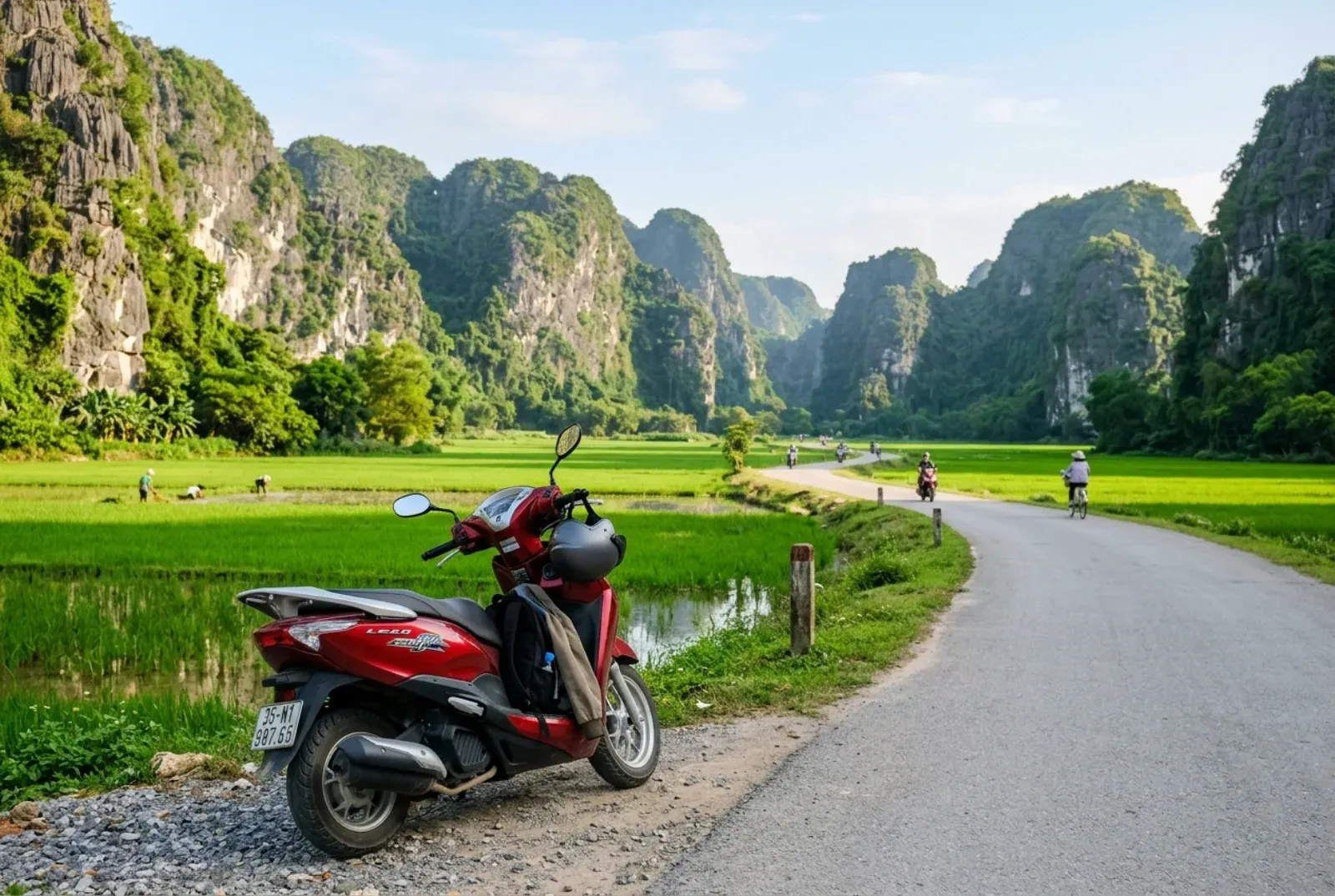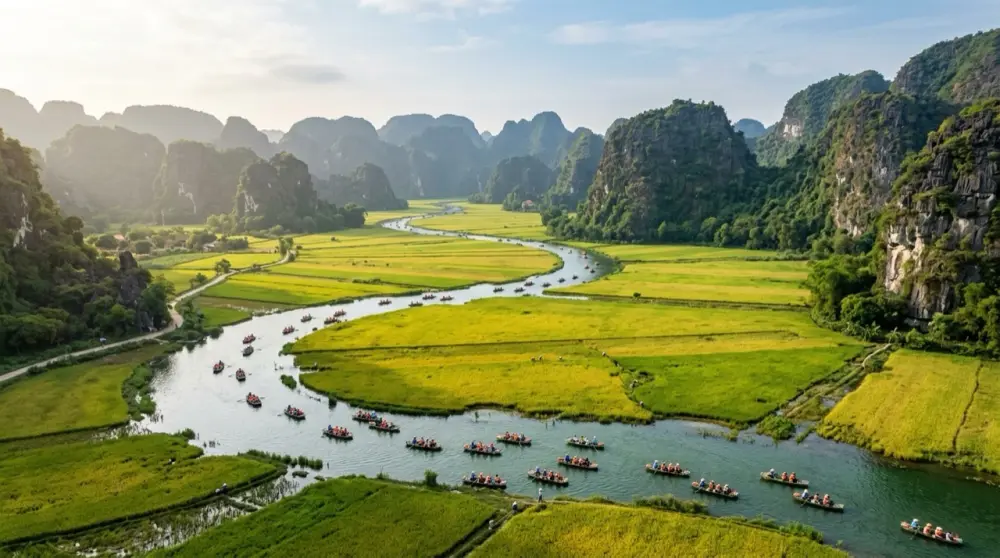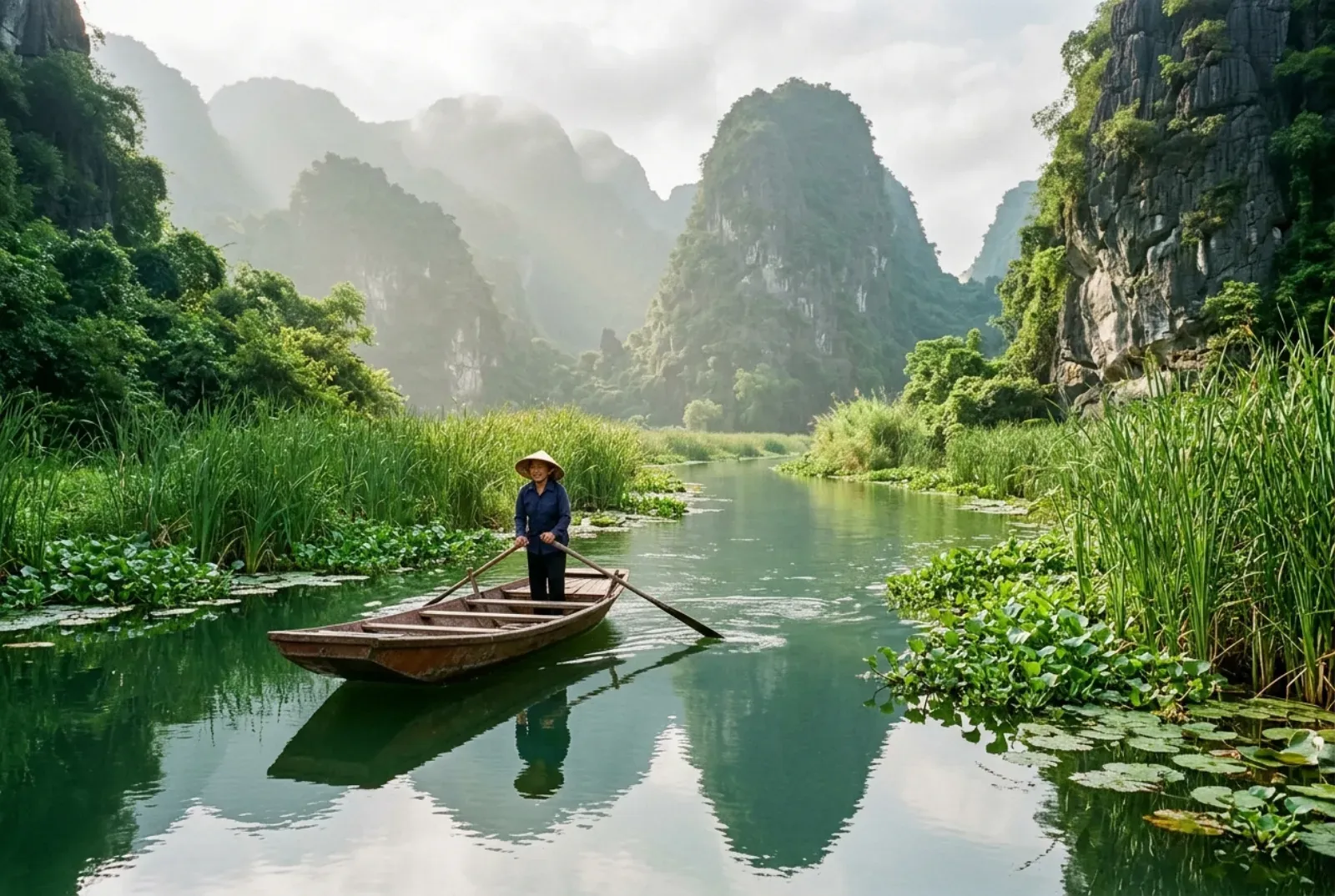
The fastest way to misunderstand Ninh Bình is to rush it. A traveller who spends two days racing between boats, viewpoints and temples sees the scenery but misses the place: the morning mist over the river, the sound of bicycles on village lanes, the unhurried lunch that stretches into an afternoon nap. Slow travel is the opposite approach. Stay in one place, do one thing well each day, and let the rest of the trip arrange itself around rest, food and conversation.
One base, and time to know it
Slow travel starts with staying put. Choose one village base and give yourself time to learn it: the lane to the river, the morning market rhythm, the cafe where you become a regular by day three. A single base removes the daily friction of packing, checking in and finding your bearings, and it leaves your energy for the things that actually matter.
It also changes how local people treat you. A guest who stays three nights is a familiar face; a guest who passes through for one afternoon is a transaction. That familiarity is worth more than any upgrade.
Village mornings: the best hours of the day
Ninh Bình mornings belong to the village. Mist lifts from the river, farmers head to the fields, and the boat piers are quiet before the day’s visitors arrive. Wake early, walk the lanes before breakfast, and watch the light change on the cliffs. These are the hours that photographs rarely capture and travellers most often remember.
Keep mornings unscheduled. A walk, a coffee and a slow breakfast are a complete morning in Ninh Bình, and they set up the rest of the day far better than a 7 AM departure for a distant sight.
Homestay life: hosts as guides
A family-run homestay is the heart of slow travel in Ninh Bình. Hosts know which boat ride is quietest today, which lane floods after rain, and where to eat when you are tired of rich food. Ask questions, accept advice, and let your host shape a day or two of your trip; local knowledge beats any itinerary written far away.
Homestay life also has its own rhythm: shared meals, garden breakfasts, bicycles borrowed for an afternoon, and evenings spent on a terrace rather than in a bar. Join that rhythm instead of fighting it, and the trip slows down on its own.
Unhurried days: one thing, done well
Plan one main activity per day, and let the rest of the day fill itself. A boat ride in the morning and a village cycle in the afternoon is a full day. A viewpoint climb followed by a long lunch and a nap is a full day. Trying to add a temple, a pagoda and a second boat ride turns a holiday into a schedule, and schedules are what most travellers came here to escape.
Build rest into the plan deliberately. An afternoon with a book, a riverside walk and an early dinner is not a wasted afternoon; it is the recovery that makes the next day’s early start possible.
Disconnecting: less screen, more landscape
Slow travel is easier when the phone stays in a pocket. Put it away on boat rides, leave it behind on village walks, and check messages once or twice a day rather than constantly. The karst landscape rewards attention: birdsong, water, wind in the reeds and the changing light are all easy to miss while looking at a screen.
You do not need to go fully offline. Share photos in the evening, message home when you feel like it, and keep maps handy for cycling. The goal is not a digital detox challenge; it is simply giving the landscape more of your attention than your feed.
Frequently Asked Questions
How many days do I need for slow travel in Ninh Bình?
Three days is a good minimum, and four or five days is better. Slow travel needs at least one day with nothing scheduled, which a two-day trip rarely allows.
Is slow travel more expensive than a fast trip?
Usually not. One base, village eateries and bicycles cost less than constant transport and tour bookings, and a longer stay often means a slower, cheaper daily pace.
Should I book everything in advance for a slow trip?
Book your stay and your arrival transport, then leave daily activities flexible. Your host’s advice on the day is often better than a booking made weeks ahead.
Can I travel slowly with children?
Yes, and children often enjoy it most. One base, gentle boats, village cycling and unhurried meals suit family rhythms far better than a packed sightseeing schedule.
What if I get bored with a slow pace?
Add one active day, such as a viewpoint climb or a longer cycle, rather than abandoning the pace entirely. Slow travel is about balance, not about doing nothing.