If you visit Ninh Bình in spring, you will quickly notice that something is different. Temples are busier, incense smoke hangs in the air, families travel together in large groups, and the province's big religious and historical festivals are in full swing. Spring festival season is one of the most rewarding times to visit, and also one of the most crowded, so it helps to understand what is happening, why it matters, and how to take part respectfully without getting swept along by the crowds. This guide covers the season in general terms: festival dates follow the lunar calendar and vary from year to year, so always check the current year's calendar before you plan around a specific festival.
What spring festival season feels like
Spring festivals in Ninh Bình are rooted in Vietnamese religious and village traditions, and they blend pilgrimage, prayer, folk performance and family outings. At a major temple festival you can expect processions, offerings, chanting, food stalls and a constant flow of visitors, often from early morning. The atmosphere is devout and festive at the same time, and it is very different from the quiet boat tours most travellers associate with Ninh Bình.
That mix is the appeal, and also the challenge. A festival visit is a cultural experience, not a sightseeing checklist item, and it rewards travellers who arrive early, move slowly and accept that queues and crowds are part of the day. If you prefer quiet temples, visit on a weekday outside the main festival days, or pair a festival morning with a peaceful afternoon boat ride.
Bái Đính: the great spring pilgrimage
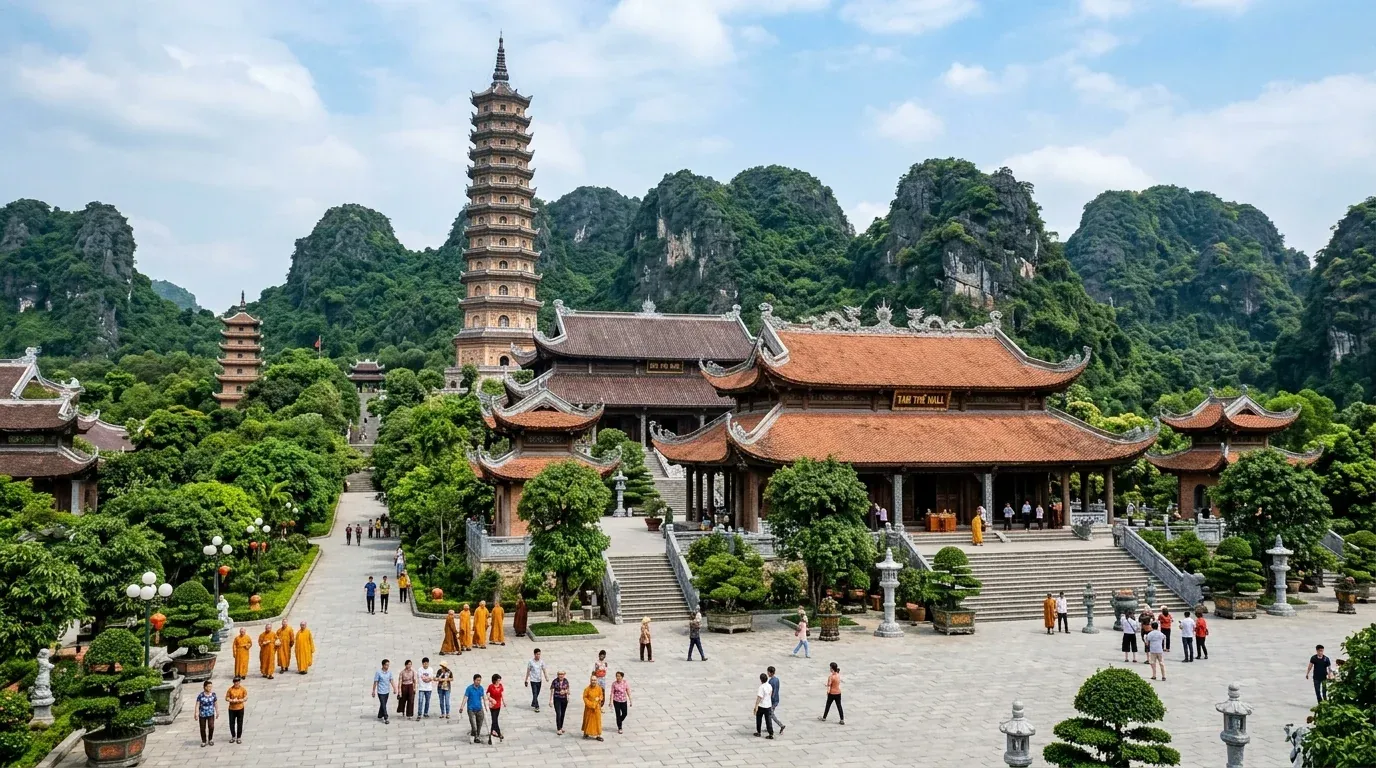
Bái Đính Pagoda, one of Vietnam's largest Buddhist complexes, draws huge numbers of pilgrims in spring, and its festival season is the best-known in the province. Expect a vast complex, long walkways, many halls and shrines, and a steady stream of worshippers making offerings and prayers. The scale is part of the experience, but so is the need to plan: wear comfortable shoes, carry water, and allow far more time than a normal temple visit.
For practical visiting details, see our Bái Đính Pagoda guide, which explains how the complex is laid out. During festival season, treat that guide as a starting point and expect everything to take longer, from walking between halls to finding a quiet corner for a photograph.
Hoa Lư and Tràng An: history and heritage festivals
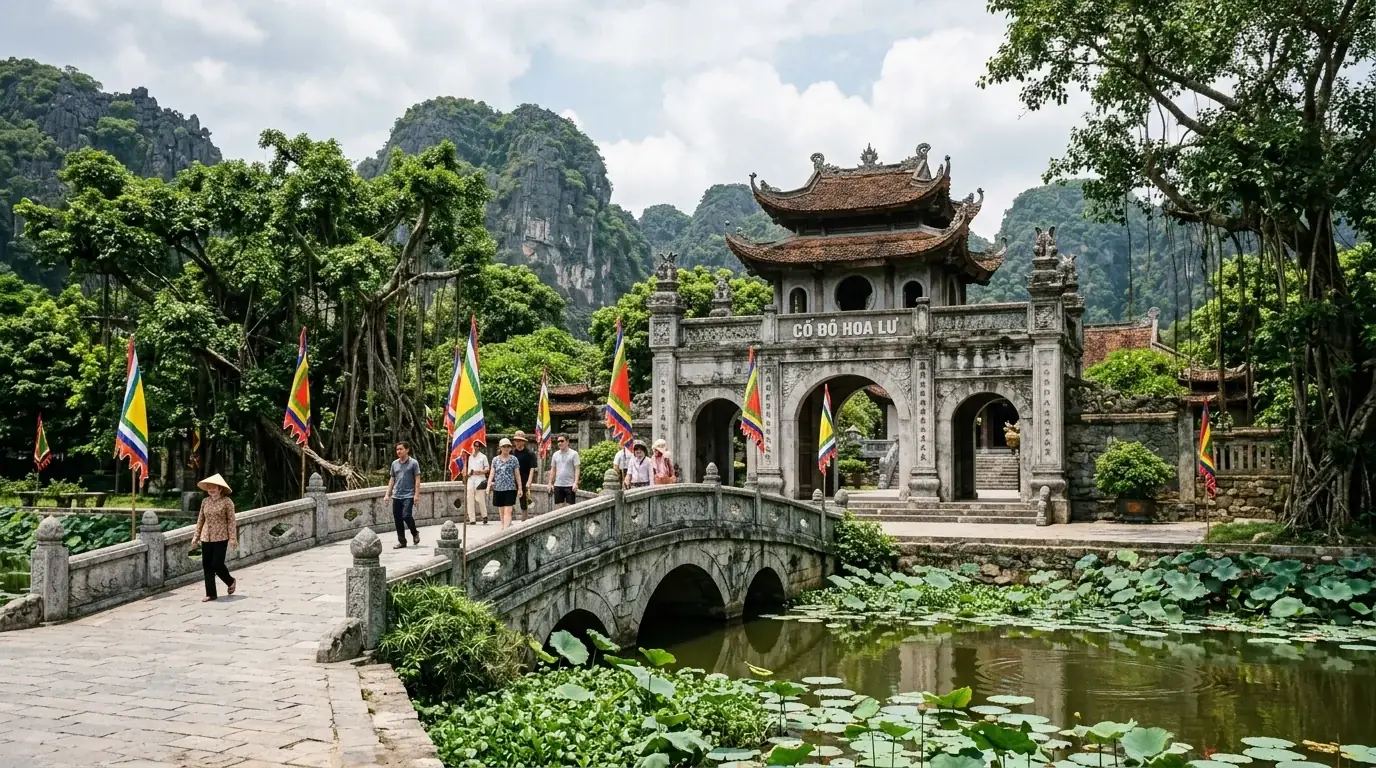
Spring also brings festivals connected to Hoa Lư Ancient Capital, the seat of Vietnam's early dynasties, where historical commemorations honour the kings and traditions of the region. These events feel more historical and communal than a purely religious pilgrimage, with processions, traditional performances and village participation. They are a good choice if you want to understand Ninh Bình's identity as an ancient capital, not only as a scenic province.
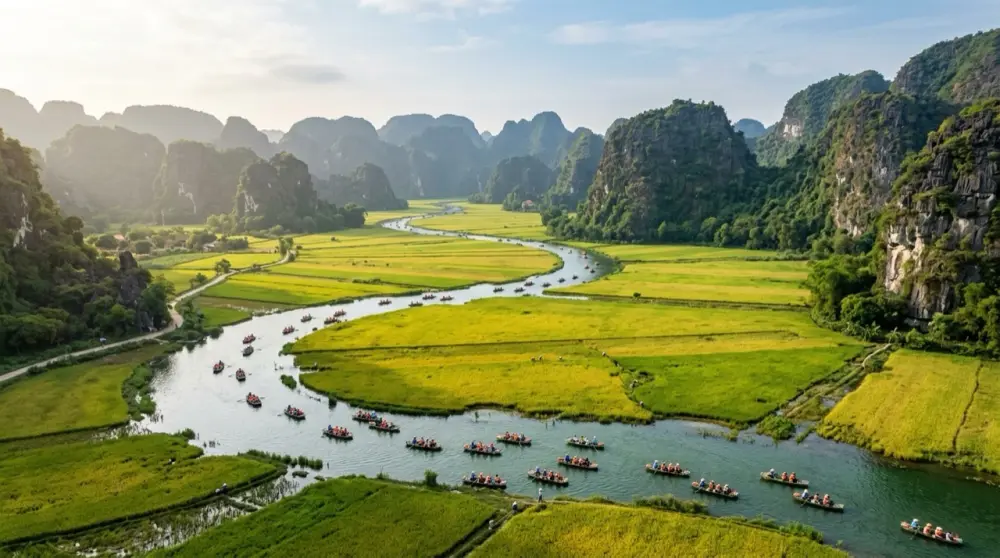
Around Tràng An, the heritage landscape itself becomes part of the season, with temple visits and boat tours combining in a single day for many Vietnamese visitors. If you plan a boat tour during festival season, go early, expect more visitors than usual, and consider Van Long or another quieter boat option if the main sites feel too busy. Our history and culture guide gives the background that makes these festivals meaningful rather than merely colourful.
Etiquette, dress and photography at festivals
Dress modestly for temple festivals: cover shoulders and knees, remove hats inside shrine halls where others do so, and keep your voice low in prayer areas. Offerings and incense are part of worship, not a photo opportunity, so photograph people only with permission and never pose in front of someone who is praying. If you are unsure whether photography is allowed in a hall, look for signs or ask a staff member.
Queues are normal, and pushing to the front is noticed and frowned upon. Follow the flow of visitors, keep bags close in crowds, and carry cash for small purchases and donations. Children are welcome at festivals, but keep them close and explain in advance that this is a religious event where quiet behaviour matters, even when the surrounding fair feels like a celebration.
Planning a spring festival trip
Because festival dates follow the lunar calendar and vary year to year, check the current year's dates from a reliable source before you book transport or accommodation, and avoid assuming a festival falls on the same date as last year. Book accommodation early for festival periods, especially in Tam Cốc village, and expect transport to be busier than usual. A flexible plan works best: one festival morning, one quiet afternoon, and a backup sight in case the crowds at a major temple are heavier than you enjoy.
Spring weather in Ninh Bình is generally mild, but it can be damp and changeable, so pack a light rain jacket and layers. For the wider seasonal picture, see our month by month guide, which places festival season alongside rice, weather and crowd patterns through the year.
Frequently Asked Questions
When is spring festival season in Ninh Bình?
Spring festival season runs through the early months of the lunar calendar, with the largest temple and historical festivals clustered in that period. Exact dates follow the lunar calendar and vary from year to year, so check the current year's calendar before planning.
Which festivals are the biggest in Ninh Bình?
The Bái Đính Pagoda festival season is the largest pilgrimage event, and the Hoa Lư historical festivals are the most important for the province's ancient capital identity. Both draw large numbers of Vietnamese visitors.
Are spring festivals crowded?
Yes, especially on weekends and the main festival days. Arrive early, allow extra time for every part of the visit, and consider a weekday visit if you prefer a calmer experience.
What should I wear to a temple festival?
Dress modestly, covering shoulders and knees, and wear comfortable shoes for long walks around large complexes. Keep your voice low in prayer areas and ask before photographing people.
Can I combine a festival visit with a boat tour?
Yes, and it makes a good day: a festival morning followed by a quieter afternoon boat ride. Go early for the boat tour too, since festival season brings extra visitors to the main piers as well.