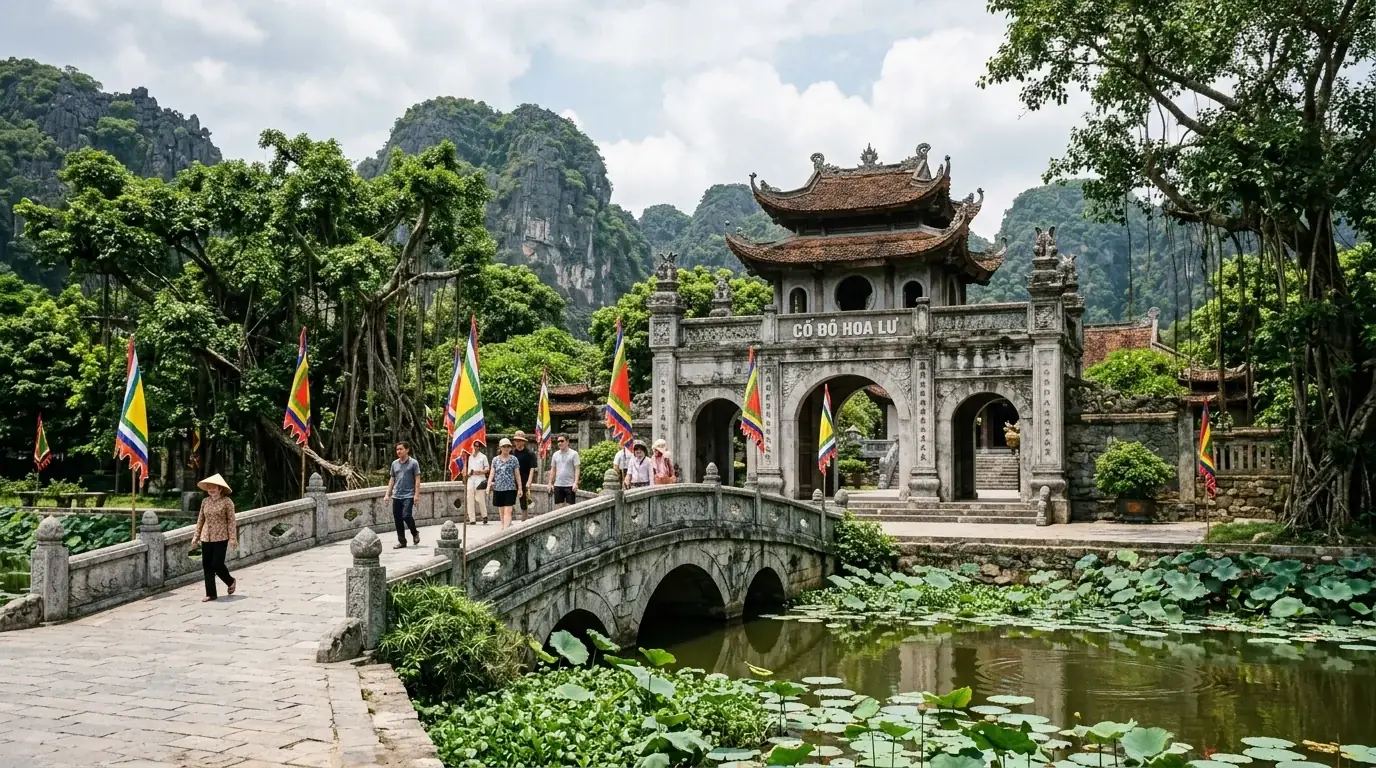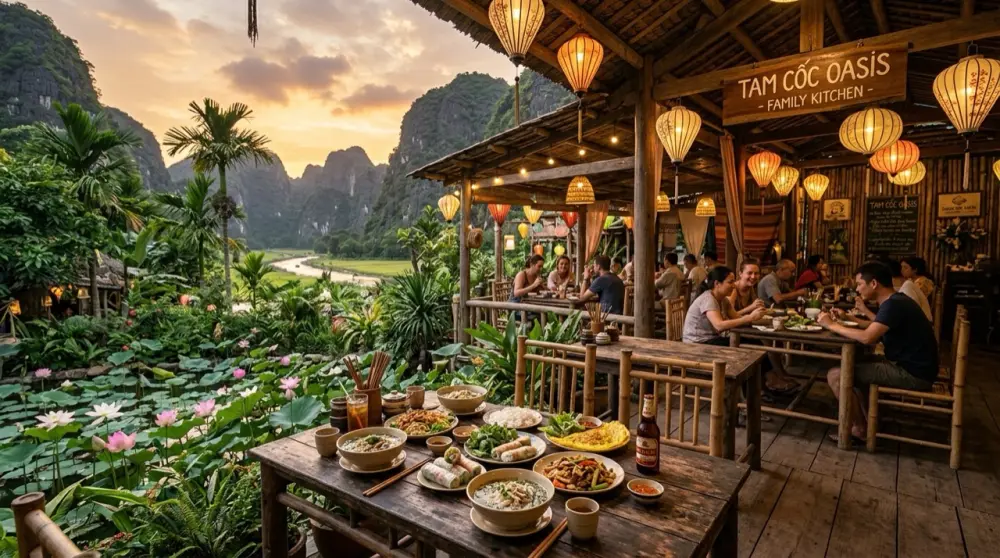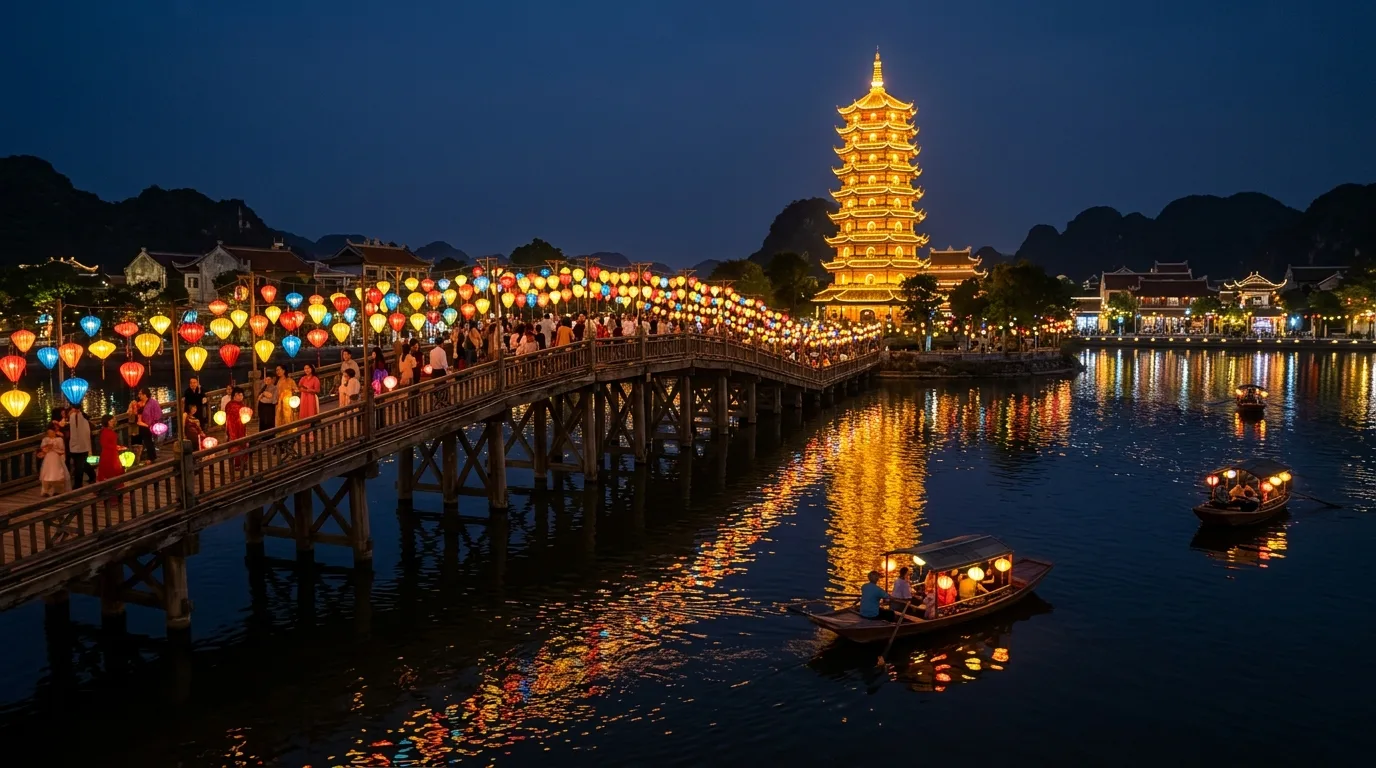
Tết, the Vietnamese Lunar New Year, is not just a holiday in Ninh Bình. It is the moment when families reunite, ancestors are honoured, homes are cleaned and decorated, and the whole province slows down for its most important celebration of the year. For a traveller, Tết is both a privilege and a planning challenge: you can witness traditions you will not see at any other time, but many shops close, transport is busy around the holiday, and the normal rhythm of restaurants, tours and services changes. This guide explains what changes, what stays open in general terms, and how to enjoy Tết without frustration. Note that the date of Tết follows the lunar calendar and moves each year, so check the current year's date before you plan.
What Tết means, and why everything slows down
Tết marks the turn of the lunar year and centres on family: people return to their home villages, clean and decorate their houses, prepare special food, visit relatives, and pay respects to ancestors. In Ninh Bình, that means Tam Cốc village and the surrounding countryside feel more residential and less tourist-focused than usual, as hosts and guides spend the holiday with their own families. This is not a shutdown aimed at visitors. It is a national family holiday, and understanding that makes the slower pace feel warm rather than inconvenient.
The days immediately before Tết are busy with preparation, the first days of the new year are the quietest for services, and normal life returns gradually afterwards. If you are in Ninh Bình during Tết itself, expect a village atmosphere: family gatherings, festive decorations, and a slower, more personal pace, rather than a full programme of tours and restaurants.
Transport, shops and services during Tết
Transport is the biggest practical issue around Tết. Many Vietnamese people travel home for the holiday, so buses, trains and roads are busier than usual in the days before and after, and booking ahead matters more than at any other time of year. Once the holiday itself begins, some local transport and tour services run on a reduced pattern, and availability can be unpredictable from day to day.
Many small shops, family eateries and local services close for some or all of the holiday, while larger hotels and their restaurants are more likely to remain open. Stock up on essentials, carry cash, and confirm with your host what will be open and what will not. A good host is your best source of Tết information: they know which neighbours are open, which boat services are running, and which day is best for a quiet village walk.
Tết food and customs to look out for
Tết food is festive and symbolic. Bánh chưng, square sticky rice cakes filled with pork and mung beans, is the classic Tết dish, prepared in the days before the holiday and shared with family and guests. Fruit trays, candied fruits, roasted seeds and special sweets appear in homes and shops, and a visit to a Vietnamese home during Tết often begins with an offer of food and drink, which it is polite to accept graciously.
Other customs you may notice include red envelopes given to children, peach blossom and kumquat trees decorating homes and streets, and first-footing visits on the first morning of the new year. If you are invited into a home, dress neatly, remove shoes where others do, bring a small gift such as fruit or sweets, and avoid discussing sad or unlucky topics. A little formality goes a long way at Tết.
Tips for travellers visiting at Tết
Book accommodation and transport well ahead, and choose a homestay or hotel whose host will be present during the holiday, so you have someone to ask. Plan your days loosely: one main activity a day, with the rest left open, works far better at Tết than a packed itinerary. Keep cash, water and snacks with you, and carry your hotel's address in Vietnamese, since fewer staff may be on duty to help with directions.
Above all, treat Tết as a cultural experience rather than a sightseeing trip. A quiet walk through a decorated village, a temple visit, a shared meal with your host family and a slow boat ride on a calm day can be more memorable than ticking off sights. For the seasonal context, see our month by month guide and our history and culture guide, which explain the traditions behind the holiday.
If Tết timing does not suit you
If a full programme of tours, restaurants and boat services matters more to you than witnessing Tết itself, consider visiting just before the holiday preparations begin or after normal services have resumed. The weeks around Tết still carry festive decorations and a lively atmosphere, without the quietest days of the holiday itself. Either way, check the current year's Tết date early, because it moves each year and catches many travellers by surprise.
Whatever you choose, do not try to force a normal itinerary onto Tết days. The travellers who enjoy Tết most are the ones who slow down with the province, accept that some things will be closed, and find their best moments in the warmth of a family holiday rather than in a list of attractions.
Frequently Asked Questions
When is Tết?
Tết marks the Vietnamese Lunar New Year, and its date follows the lunar calendar, so it moves each year. Check the current year's date from a reliable source before booking transport or accommodation.
Do restaurants and shops close during Tết?
Many small shops, family eateries and local services close for some or all of the holiday, while larger hotels and their restaurants are more likely to stay open. Ask your host what will be open on each day of your stay.
Is transport busy around Tết?
Yes, very busy in the days before and after the holiday, as many people travel home to their families. Book transport and accommodation well ahead, and allow extra time for every journey.
What food should I try at Tết?
Bánh chưng, the classic square sticky rice cake, is the signature Tết dish, along with festive fruit trays, candied fruits and roasted seeds. If you are invited to a home, accept offered food graciously.
Is Tết a good time to visit Ninh Bình?
It is a wonderful cultural experience if you value traditions, family atmosphere and a slower pace, and you plan loosely. If you want a full programme of tours and restaurants every day, the weeks just before or after Tết may suit you better.