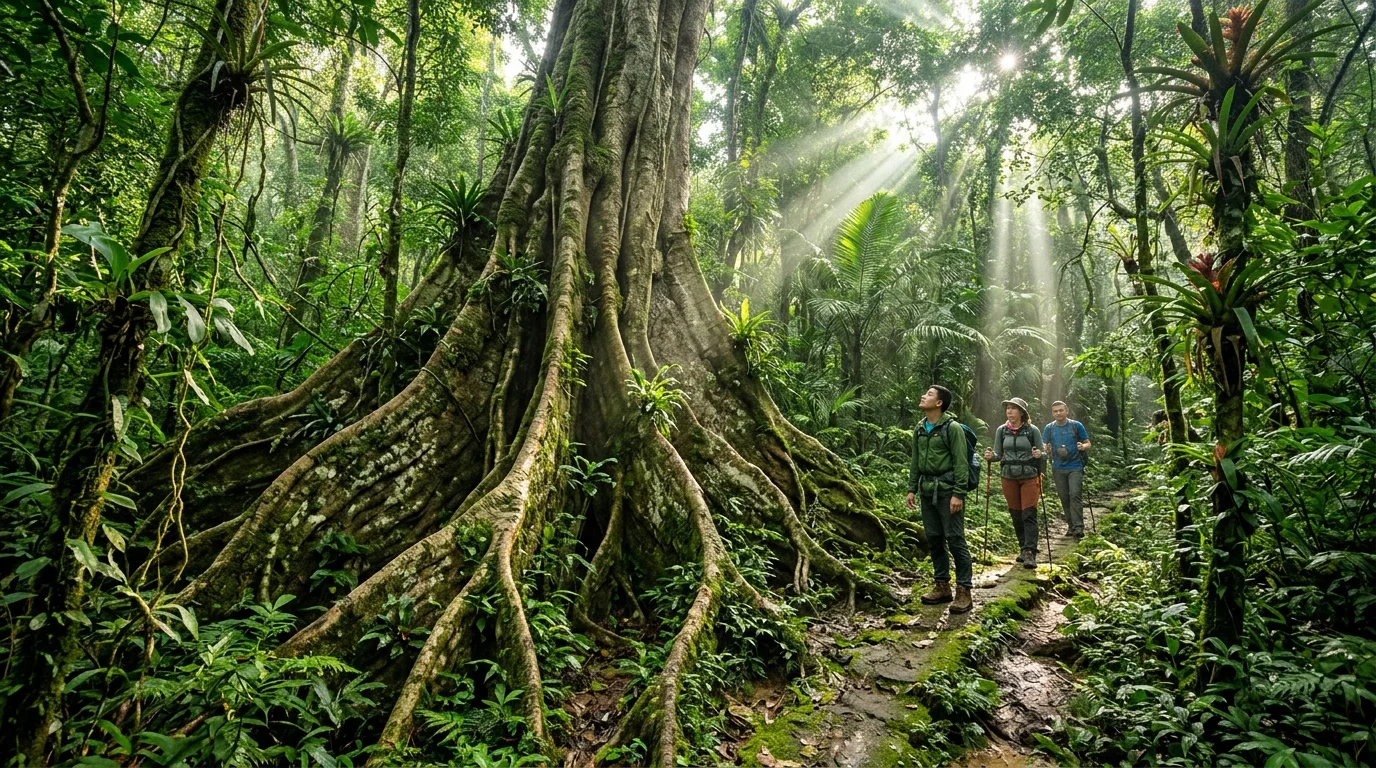
Most visitors see Ninh Bình from a boat, but the province is just as rewarding on foot. Stone stairways climb to viewpoints, temple grounds invite slow wandering, lakeside paths follow the wetland edge, and forest trails in Cúc Phương lead into ancient trees and birdsong. This guide gathers the walks beyond the famous national park, with honest notes on difficulty and preparation, so you can choose a walk that suits your fitness rather than your ambition.
Hang Múa: the stairway climb
Hang Múa is the most famous walk in Ninh Bình, and the most demanding in a short distance. A long stone stairway climbs to the dragon peak, with a viewpoint over the river valley below, and the climb is steep enough that it deserves respect: go slowly, carry water, wear shoes with grip, and rest on the way up without embarrassment. The reward is one of the finest views in northern Vietnam, especially in soft morning or late afternoon light.
This is a walk to do when you feel fresh, not after a long boat ride and a heavy lunch. Keep the rest of that day light, and skip the climb entirely if you have knee problems or feel unwell in the heat.
Bái Đính: wandering a vast pagoda complex
Bái Đính is less a trail than a day of walking: wide courtyards, long corridors and many halls spread across a hillside, so you will cover a good distance without noticing it. Comfortable walking shoes matter more than hiking boots here, and a hat and water matter more than a map, since the complex is well laid out for wandering.
Take the complex in sections, resting in shaded courtyards, and dress modestly as you would for any temple visit. The scale is the attraction, so there is no need to rush from hall to hall.
Vân Long: lakeside paths and quiet mornings
Around the Vân Long wetland, flat lakeside paths offer the gentlest walking in this guide. The ground is level, the pace is slow, and the main attraction is what you see rather than what you climb: water birds, reed beds and limestone cliffs reflected in still water. Bring binoculars if you enjoy birds, and go early for the calmest light and the most activity.
These paths suit families, older travellers and anyone recovering from a harder day. Pair a lakeside walk with a boat ride for a full, unhurried morning.
Thung Nham and Bích Động: valley and pagoda walks
Thung Nham combines garden paths with a bird valley, and it is at its best in the late afternoon when birds return to roost. The walking is gentle, with plenty of places to stop, and the valley setting makes it a good choice for travellers who want nature without a climb. Bích Động, by contrast, mixes stone paths with pagoda tiers tucked into the cliff, so expect steps and uneven stone, but nothing as sustained as the Hang Múa stairway.
Both walks reward slow looking: pause at viewpoints, listen for birdsong, and let the group spread out rather than marching in a line.
Cúc Phương: the forest benchmark
Cúc Phương remains the benchmark for serious hiking in Ninh Bình, with forest trails that range from short walks to full-day treks through ancient trees. For any forest trail beyond a short, marked walk, go with a guide, tell your stay where you are going, and carry more water than you think you need. Forest paths can be slippery after rain, and mobile signal is not guaranteed under the canopy.
If you are new to forest hiking, start with one of the shorter walks in this guide first, then judge whether a Cúc Phương trail suits you. A walk you enjoy is always better than a trek you endure.
Preparation: shoes, water, weather and safety
Good walking shoes with grip are the single most important item, ahead of any gadget. Add water, sun protection, a hat, insect repellent in the wet season and a light rain layer, and carry them in a small daypack rather than a large bag. Check the weather before a forest or viewpoint walk, and postpone a climb in heavy rain or extreme heat; the viewpoint will still be there tomorrow.
Walk with someone when you can, especially in forest, and let your host know your plan. If a path looks closed, overgrown or unsafe, turn back. Ninh Bình has enough good walks that no single trail is worth a risk.
Frequently Asked Questions
Do I need hiking boots for Ninh Bình walks?
Sturdy walking shoes with grip are enough for most walks in this guide. Reserve proper hiking boots for longer forest trails in Cúc Phương, where paths can be muddy and uneven.
Which walk is best for families with children?
The flat lakeside paths at Vân Long and the garden paths at Thung Nham are the easiest, with no demanding climb and plenty of places to stop.
Is Hang Múa suitable for older travellers?
It depends on fitness and knees rather than age. The stairway is long and steep, so older travellers should climb slowly, rest often, and skip it if they have knee problems or feel unwell in the heat.
Do I need a guide for walking in Ninh Bình?
Not for village, temple or lakeside walks. For forest trails in Cúc Phương beyond a short marked walk, a guide is strongly recommended for navigation and safety.
What should I do if it rains during a walk?
Seek shelter, avoid slippery stone steps and forest paths, and postpone viewpoint climbs in heavy rain. Temples and pagoda grounds cope better with a wet day than exposed stairways.